Grafted
Piña Colada
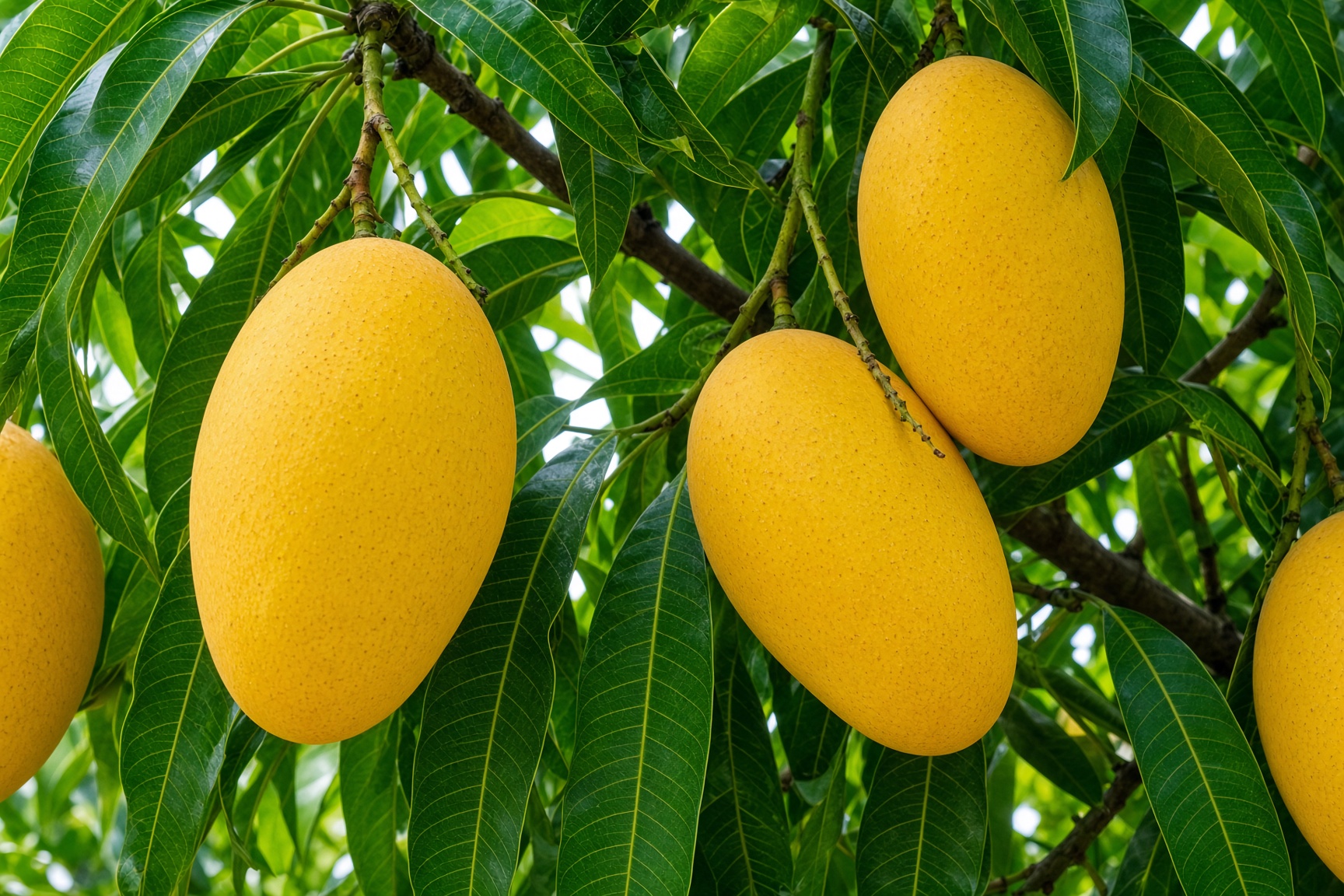
Tastes like the name: pineapple up front, coconut behind it. Flesh is golden and low in fiber. The fruit itself is small, often under half a pound, and the seed is large for the size. Ripe skin is pale yellow, not red.
This variety
The fruit
Tastes like the name: pineapple up front, coconut behind it. Flesh is golden and low in fiber. The fruit itself is small, often under half a pound, and the seed is large for the size. Ripe skin is pale yellow, not red.
Taste, season, cold, and how to plant this one.
- Taste
- Tastes like the name: pineapple up front, coconut behind it. Flesh is golden and low in fiber. The fruit itself is small, often under half a pound, and the seed is large for the size. Ripe skin is pale yellow, not red.
- Ripens
- Summer, often June into July. Use aroma and a soft nose. The color is pale gold with fine dots, not a grocery-store blush.
- Zones
- Zones 10 to 11.
- Hardiness
- A young grafted specialty mango. Cover a freeze and keep the graft above the mulch.
- Size
- A dooryard tree. Prune to the height you will actually pick.
- Tips
- Eat it fresh. This is a flavor tree, not a shipping-fruit type. The 3-gallon pot is the one we ship.
- Pollination
- Self-fruitful. A Gary Zill selection.
Growing notes
Mature mango wood is often hurt near 25°F, and a young tree nearer 29 to 30°F. They want full sun, sharp drainage, and a dry spell to bloom. Carrie, Cogshall, Pickering, Mallika, and Julie stay easier to keep small. Flavor is the reason to pick a variety. The skin color is not the same on every one.