Grafted
Pickering
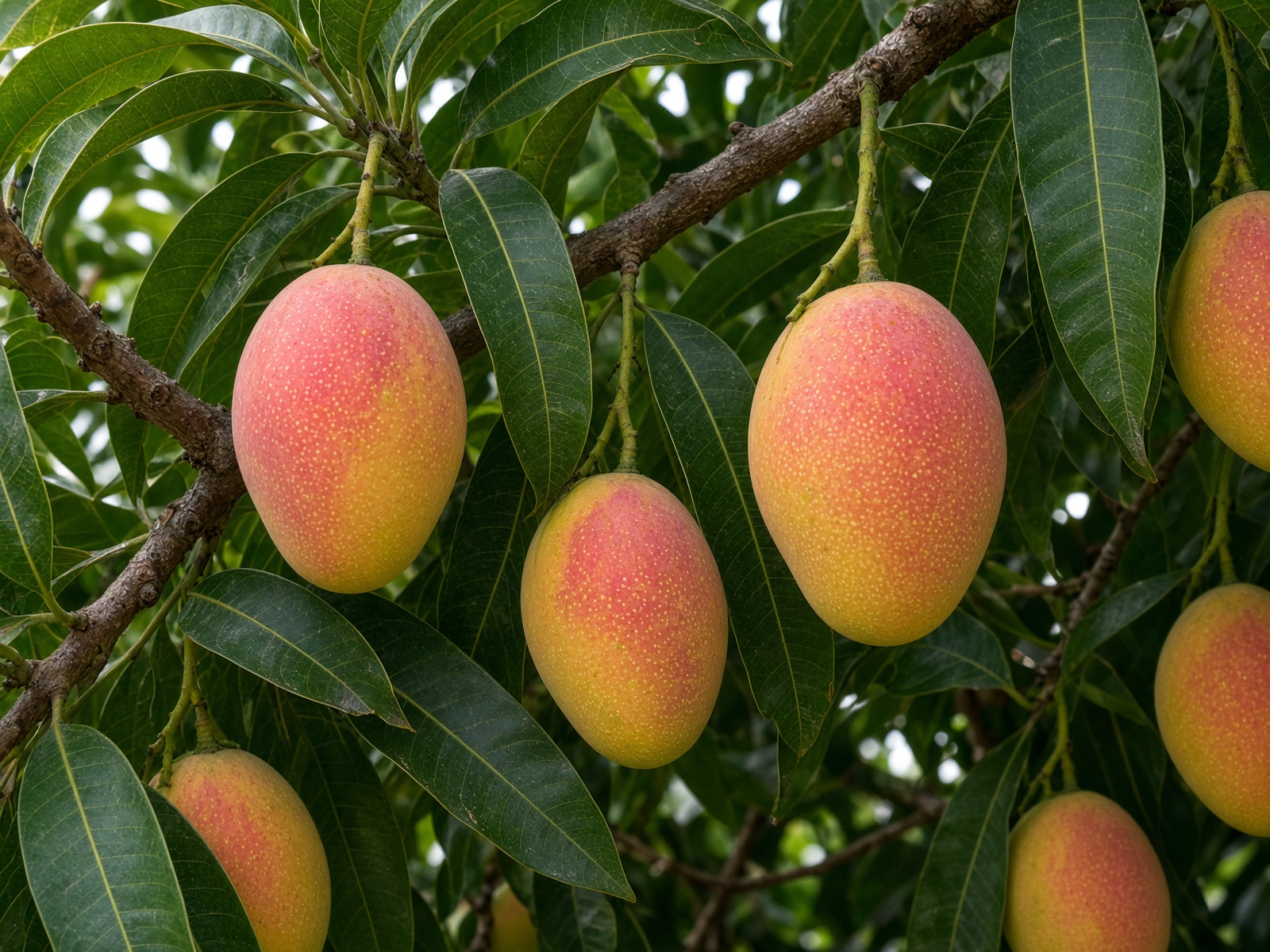
Very sweet, low fiber, and rich, with a coconut note. One of the better eating mangoes we can keep on a small tree. Ripe skin is light yellow with a splotchy pink to burgundy blush and pale dots.
This variety
The fruit
Very sweet, low fiber, and rich, with a coconut note. One of the better eating mangoes we can keep on a small tree. Ripe skin is light yellow with a splotchy pink to burgundy blush and pale dots.
Taste, season, cold, and how to plant this one.
- Taste
- Very sweet, low fiber, and rich, with a coconut note. One of the better eating mangoes we can keep on a small tree. Ripe skin is light yellow with a splotchy pink to burgundy blush and pale dots.
- Ripens
- June into July in Naples. Pick when the yellow shows and the fruit gives slightly at the nose.
- Zones
- Zones 10 to 11.
- Hardiness
- Compact enough to cover. Same frost rule as the other young grafts.
- Size
- A small, dense tree. One of the mangoes that fits a tight yard.
- Tips
- Full sun, and do not park the sprinkler on the bloom. The 3-gallon ships.
- Pollination
- Self-fruitful.
Growing notes
Mature mango wood is often hurt near 25°F, and a young tree nearer 29 to 30°F. They want full sun, sharp drainage, and a dry spell to bloom. Carrie, Cogshall, Pickering, Mallika, and Julie stay easier to keep small. Flavor is the reason to pick a variety. The skin color is not the same on every one.