Grafted
Okrung
Also called Ok Rong
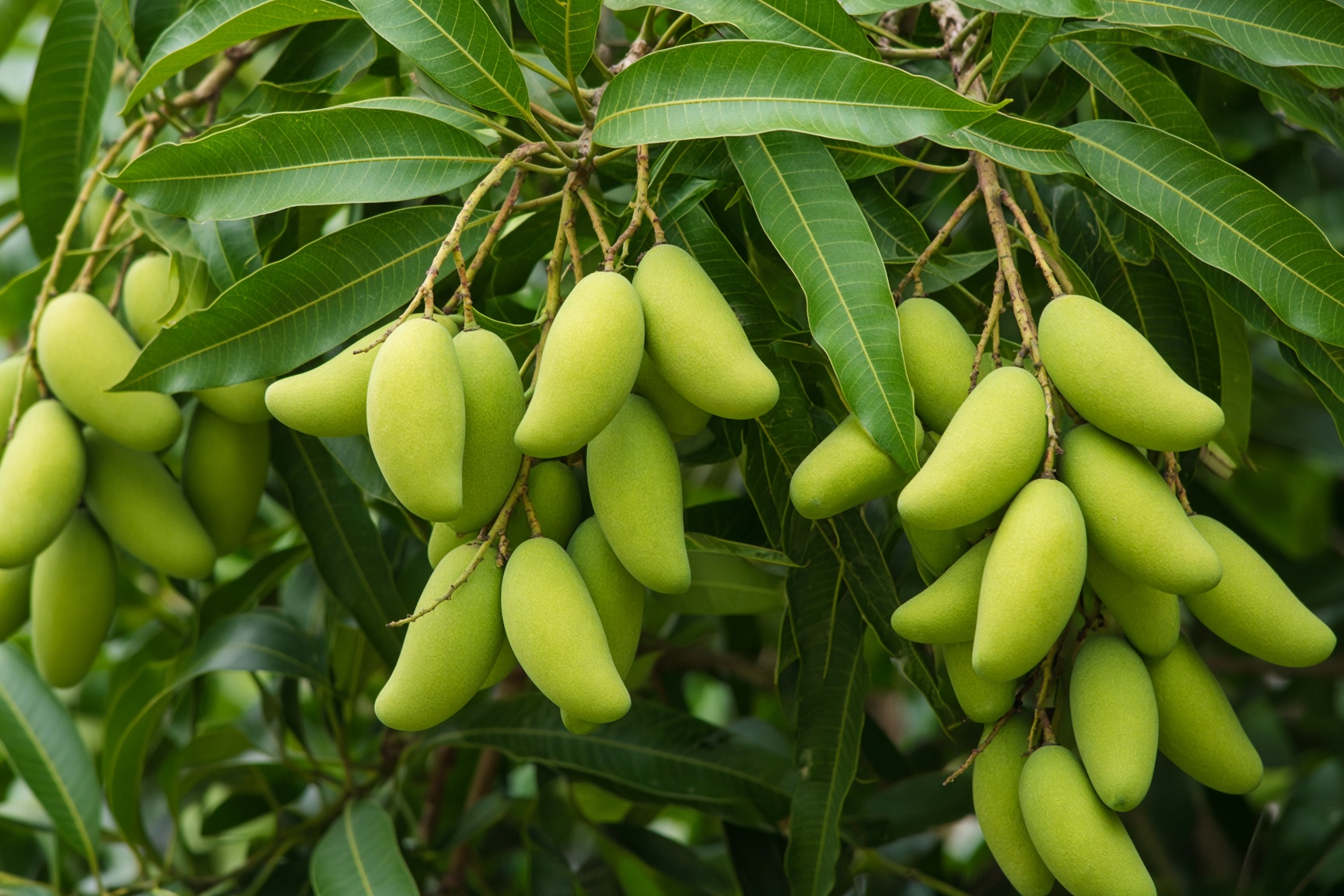
The Thai sticky-rice mango. Very sweet, floral, a little fibrous, and traditionally eaten green or ripe. Skin stays green to yellow-green. There is no red blush.
This variety
The fruit
The Thai sticky-rice mango. Very sweet, floral, a little fibrous, and traditionally eaten green or ripe. Skin stays green to yellow-green. There is no red blush.
Taste, season, cold, and how to plant this one.
- Taste
- The Thai sticky-rice mango. Very sweet, floral, a little fibrous, and traditionally eaten green or ripe. Skin stays green to yellow-green. There is no red blush.
- Ripens
- Early, often late May into June here. Small, long, slightly curved fruit that hangs in clusters and drops when ripe.
- Zones
- Zones 10 to 11.
- Hardiness
- A tropical Thai mango. Cover a new planting if a freeze is forecast.
- Size
- A medium tree. Prune if you want the fruit in reach. It is not a dwarf.
- Tips
- Also spelled Ok Rong. Do not wait for red. The 3-gallon ships. Introduced to Florida from Thailand in 1973.
- Pollination
- Self-fruitful. The seed is polyembryonic.
Growing notes
Mature mango wood is often hurt near 25°F, and a young tree nearer 29 to 30°F. They want full sun, sharp drainage, and a dry spell to bloom. Carrie, Cogshall, Pickering, Mallika, and Julie stay easier to keep small. Flavor is the reason to pick a variety. The skin color is not the same on every one.