Grafted
Ice Cream mango
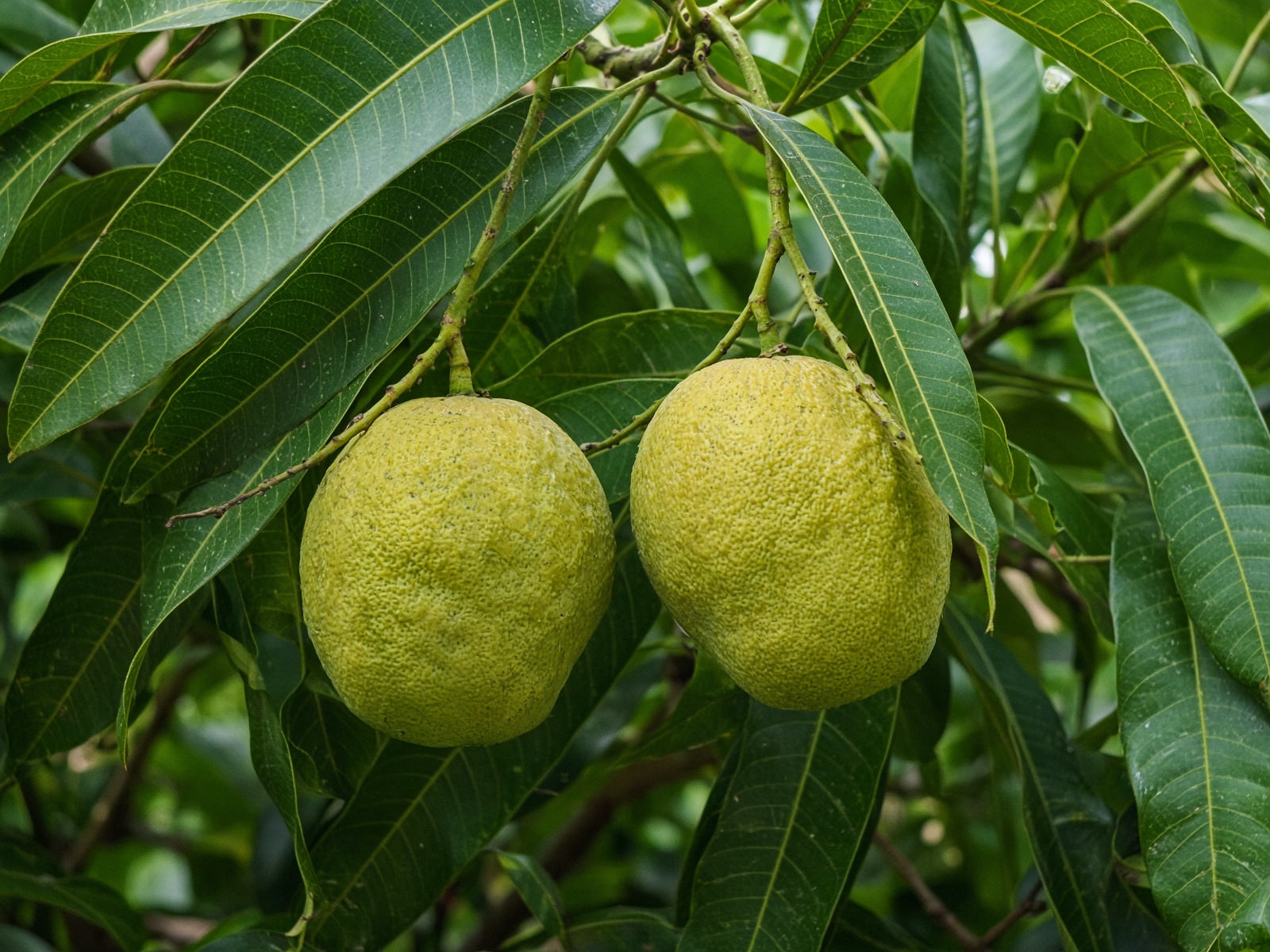
A small, creamy mango from Trinidad, not the Ice Cream banana. Fruit is a flattened oval, about half a pound, with bumpy greenish-yellow skin and no red blush. Flesh is fiberless, sweet, and closer to mango sorbet than to a sharp resin mango.
This variety
The fruit
A small, creamy mango from Trinidad, not the Ice Cream banana. Fruit is a flattened oval, about half a pound, with bumpy greenish-yellow skin and no red blush. Flesh is fiberless, sweet, and closer to mango sorbet than to a sharp resin mango.
Taste, season, cold, and how to plant this one.
- Taste
- A small, creamy mango from Trinidad, not the Ice Cream banana. Fruit is a flattened oval, about half a pound, with bumpy greenish-yellow skin and no red blush. Flesh is fiberless, sweet, and closer to mango sorbet than to a sharp resin mango.
- Ripens
- June into July. Ripe fruit stay green to yellow-green. Do not wait for a blush. It does not come.
- Zones
- Zones 10 to 11.
- Hardiness
- Treat it like any young grafted mango. Cover a freeze.
- Size
- A semi-dwarf. Fairchild keeps it near 6 to 7 feet, which is why people plant it in a tight yard. The 3-gallon ships.
- Tips
- Say mango when you order it so it is not mixed with the blue banana of the same nickname. The 3-gallon ships.
- Pollination
- It sets more fruit if another mango is nearby. Do not count on a heavy crop from one tree alone.
Growing notes
Mature mango wood is often hurt near 25°F, and a young tree nearer 29 to 30°F. They want full sun, sharp drainage, and a dry spell to bloom. Carrie, Cogshall, Pickering, Mallika, and Julie stay easier to keep small. Flavor is the reason to pick a variety. The skin color is not the same on every one.